Domestic fundraising must now be built as permanent infrastructure, not stopgap improvisation
A Temporary Reprieve
The Church, from the mighty Catholic Bishops Conference of India to itinerant pastors with their independent ministries in rural India, has heaved a sigh of relief after days of tension as news spreads that the government appears set to send the Foreign Contribution (Regulation) Amendment (FCRA) Bill, 2026, to a Joint Parliamentary Committee (JPC).
Reports suggest a motion could be moved before parliament adjourns on Aug. 13 as planned, with Parliamentary Affairs Minister Kiren Rijiju hoping that assuaging Christian bodies, their interlocutors among several chief ministers and parliamentarians, and civil society groups would give the government much-needed breathing time to focus on the political task of handling a raging Congress and other opposition parties on other issues.
The Contested Provision
The bill was introduced in the Lok Sabha, the lower house of parliament, on March 25, but its central provision has not moved an inch in five months of protest. It was proposed that when an organization’s FCRA registration lapses, is canceled or is surrendered, the assets it built with foreign funds vest automatically in a government-appointed “designated authority,” with no judicial review built into the process.
Schools, hospitals, orphanages, Church buildings raised over a century with money sent from Rome, and charities in the western world — all become liable to seizure by administrative fiat the moment Delhi decides a license should lapse.
Assurances Without Retreat
A delegation of Christian leaders, including senior bishops, led by P. Wilson, a member of the Rajya Sabha, the upper house of parliament, from the opposition Dravida Munnetra Kazhagam party, met Federal Home Minister Amit Shah, as did Mizoram Chief Minister Lalduhoma.
Both were assured that the law will not be applied retrospectively — a concession that addressed timing, not the issue of the government repeatedly tightening this financial noose on churches and NGOs.
A JPC, unlike a department-related standing committee, draws its members from both the Lok Sabha and the Rajya Sabha and can span ministries.
But a JPC report, however critical, is advisory and goes back to a government that has already signaled, through a Bharatiya Janata Party (BJP) lawmaker’s response to the American senator who had spoken for the Indian Christians.
While the senator’s “concerns” have been “heard,” the government intends to legislate this framework in some form, sometime in the future, the lawmaker said.
The parliament’s monsoon session concludes on Aug. 14, and the FCRA Bill lapses. But it can be brought next year in a different form, and perhaps without predatory clauses targeting properties.
Hence, it would be a mistake to read the referral of the bill to a JPC as evidence that the government has reconsidered its objective.
The Ministry of External Affairs’ response to American disquiet over the bill has been instructive — India told Washington in curt terms that this is an internal matter, the same posture Delhi takes toward the United Nations and other international human rights groups’ concerns on anti-Christian riots in Kandhamal or Manipur violence, village bans on Christian burials, the arrest of Catholic nuns, and attacks on itinerant independent pastors.
A Decade-Long Squeeze
The FCRA Bill sits inside a much older project, one that predates this bill by more than a decade: the steady narrowing of the space in which foreign-funded civil society, and especially the Christian institutional presence in health, education and tribal welfare, is permitted to operate.
Data from the FCRA portal tells its own story — 14,449 certificates active, against 22,498 canceled and a further 15,212 deemed expired.
Independent tallies going back to 2022 found that more than seven in ten of the organizations whose licenses had lapsed were Christian-aligned, including World Vision India, the Church’s Auxiliary for Social Action, and the Evangelical Fellowship of India, which lost their registrations in 2024.
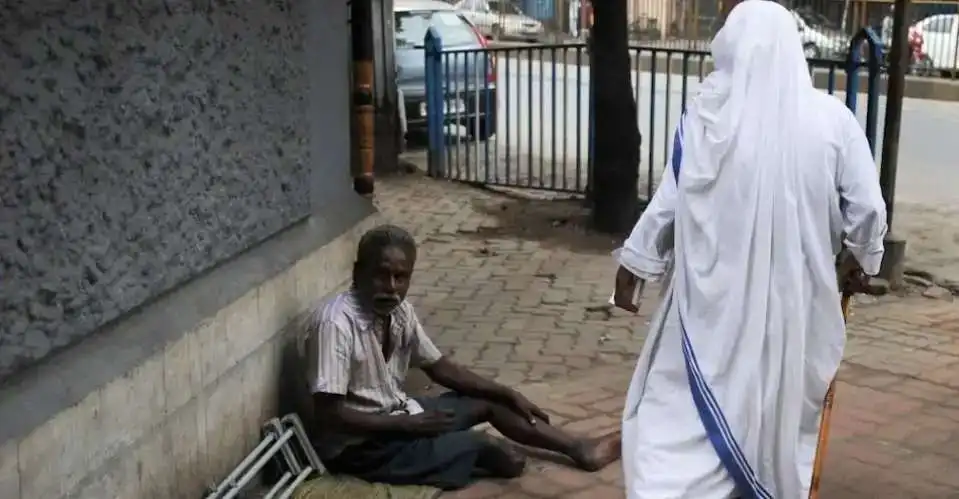
Compassion International was driven out of the country within three years of the Narendra Modi government first taking office in Delhi, and the revered Mother Teresa’s Missionaries of Charity had its renewal suspended in 2021, an act so plainly disproportionate to any stated infraction that even sympathetic commentators struggled to explain it.
Searching for a Plan B
The question facing the Church and the wider NGO sector is whether they have a Plan B.
The Church is silent, but the NGOs admit that, at present, they do not have one because they know that the government-ordered Corporate Social Responsibility (CSR) is not going to finance them, and certainly not their activities empowering the poor and the marginalized.
CSR spending under Section 135 of the Companies Act was in the region of 270 billion rupees (US$2.82 billion) in the previous financial year — but it is not free money, and it is not evenly available money.
By most credible estimates, roughly 85 percent of that pool flows to a small circle of large, well-connected NGOs with existing relationships inside corporate CSR departments; the remaining 15 percent is fought over by well over 300,000 registered organizations.
Worse, the companies with the deepest CSR budgets are, disproportionately, crony capitalist companies that live and die by government contracts, licenses and regulatory goodwill — infrastructure majors, public sector banks, telecom and energy giants.
Expecting these corporations to fund a Church-run school in Bastar or a Dalit Christian legal aid cell, at the precise moment the home ministry is signaling its displeasure with such institutions, is to expect commercial self-harm from entities that exist to avoid exactly that.
CSR was never designed to substitute for foreign philanthropy in the sectors where foreign funds have done the heaviest lifting — Dalit and tribal welfare, minority legal aid, faith-linked healthcare in regions the state itself has under-served for 70 years.
It is domestic capital, mediated by domestic political risk, and they will not risk puffing the establishment.
A reference to the JPC does give time to the Church and the NGOs to chalk out a policy just in case the government does secure a JPC mandate and brings another bill next year.
The Church and allied civil society bodies need, in this window, to build the domestic constituency the bill’s opponents currently lack outside parliament — trade unions, Dalit and Adivasi rights groups, RTI and transparency networks, and the wider secular civil liberties community, all of whom have their own reasons to fear a designated authority empowered to seize property without judicial oversight.
They also need a coordinated legal strategy ready the day any version of this bill is enacted, not assembled afterward in panic, given how thin due process protections in the current draft already are.
And they need to be honest, publicly and among themselves, that domestic fundraising, endowment-building and diversified giving — however unglamorous compared to the foreign grants of decades past — must now be built as permanent infrastructure, not stopgap improvisation.
A JPC reference is offered by a government that has never hidden where it wants this to end, and the Christian community must therefore spend the time to organize itself so that any future law or FCRA amendment does not throw it into the kind of panic that the 2026 bill created.