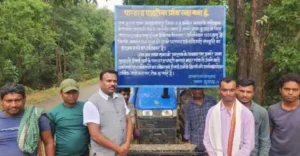
Village councils in Chhattisgarh and Odisha have banned pastors and padres in a political move guided by Hindu nationalists
Octogenarian Jesuit Stan Swami lived and died — in 2021 in police custody — for the rights of the Adivasis, the indigenous people of India, over their lands, forests, and water. But the Panchayats (Extension to Scheduled Areas) Act, 1996, or PESA, which he advocated to underpin this right, has become the bane of church work in villages of central India, and impinges on the rights of tribal people who converted to Christianity beginning in the late 18th century and picking up momentum after 1813.
This February, Supreme Court Justices Vikram Nath and Sandeep Mehta upheld the supremacy of this law and asked senior advocate Colin Gonsalves and his clients, the tribal people, to go back to the village governance systems, the Panchayats (village councils), to redress their grievances. The tribal people were in court challenging the village councils, which had forbidden pastors from entering their villages in a political move guided by violent groups believing in Hindutva — a political ideology centered on Hindu supremacy. These groups are the masterminds behind the nationwide drive against conversions to Christianity and Islam.
With the rules now thoroughly weaponized by Hindutva, many villages in states such as Chhattisgarh and Odisha have also started banning the burials of Christians on village lands, an utterly vicious violation of the fundamental right of an Indian citizen. In balancing tribal heritage against individual conscience, the Supreme Court has prioritized the former procedurally. Whether this fosters genuine protection or entrenches division remains the central question for India’s democracy in 2026, but experts hold that this ruling is a significant moment in the evolving jurisprudence surrounding tribal self-governance, religious freedom, and the weaponization of protective legislation.
Activists have noticed for some time that PESA, enacted to shield Adivasi communities from corporate exploitation of natural resources, has increasingly been invoked to regulate religious practices in Scheduled Areas that are primarily inhabited by indigenous people. The Digbal Tandi case, as it is labeled, exemplifies how village council resolutions — intended for cultural preservation and resource management — can restrict Article 25 freedoms, creating a chilling effect on Christian presence in regions already tense with allegations of “love jihad,” Ghar Wapsi campaigns, and anti-conversion laws. Love jihad is a term used by Hindu nationalists to refer to Muslim boys who marry women of other religions, feigning love and then converting them to Islam, while Ghar Wapsi is their campaign to reconvert people from other religions, specifically Christians, to Hinduism.
With Maharashtra and Chhattisgarh’s stringent Freedom of Religion Bills passed last week, the Supreme Court endorsement of decentralized restrictions raises major questions about the balance between tribal autonomy and the secularism guaranteed under the Indian Constitution. The dispute originated in Kanker district, a predominantly tribal area in northern Chhattisgarh, in June 2025. Gram Sabhas in at least eight villages — Kudal, Parvi, Junwani, Ghota, Ghotiya, Havechur, Musurputta, Sulangi, Bansla and Bondanar — erected prominent notices prohibiting the entry of Christian pastors, priests, and “so-called converted Christians” for religious activities or conversions, citing threats to indigenous culture, traditions, and identity from “illegal conversions by enticement.” This without any formal meetings by the village councils.
Incidents of violence — beatings of pastors, house demolitions, and social boycotts — were reported in increasing numbers, echoing earlier clashes in Narayanpur and Bastar districts. These events have become routine, particularly since the Narendra Modi government came to power in New Delhi, and have intensified with the state government also now under the control of Modi’s pro-Hindu Bharatiya Janata Party (BJP). Though Modi visits churches at Christmas and entertains Catholic Bishops in Kerala on the eve of every election, his party and non-state actors of the Rashtriya Swayamsevak Sangh — RSS or National Volunteer Corps, which is seen as the ideological parent of the ruling BJP — and its myriad offshoots in villages, have framed Christian work in education, health and development as predatory allurement of innocent tribals.
Chief Justice Ramesh Sinha and Justice Bibhu Datta Guru of the Chhattisgarh High Court, who had first heard the challenge to the village rulings, had characterized them as precautionary measures by village councils to protect tribal interests and cultural heritage. The judgment went on to describe “conversion by inducement” as a “social menace threatening national unity and tribal continuity.” Missionaries, it observed, had shifted from welfare institutions to proselytization, exploiting vulnerability, eroding indigenous languages, rituals, and customary laws, and potentially altering political representation. This expansive judgment went beyond the narrow challenge to hoardings, offering a policy-like critique of missionary work in tribal areas while deferring to decentralized authority.
Many Christian activists objected to the High Court indicting Christian work, saying it impacted social harmony, polarized villages, and led to boycotts or violence. The court exonerated the village councils of religious bigotry, saying the August notice was deemed benign and focused on heritage preservation rather than hatred.
In his appeal in the Supreme Court, senior advocate Colin Gonsalves argued that the High Court had exceeded its brief by making “sweeping and adverse observations” on Christian missionary activities without any material on record. He highlighted new evidence of instigation by ruling-party members, and mentioned that the apex court had before it matters involving approximately 700 attacks on pastors during prayer meetings, ongoing burial disputes, and the stark statistic of zero convictions under Chhattisgarh’s anti-conversion provisions in the past decade.
Critics say Christian villagers have little chance of justice from the village councils, which are both respondent and adjudicator. The ruling’s implications for the constitution’s core Articles 14 and 19, which speak of equality before the law and movement, remain unaddressed, potentially chilling evangelism while leaving syncretic or voluntary practices vulnerable. Articles 14, 19, and 21 are called the Golden Triangle of rights of citizens in India.
The All India Catholic Union, the United Christian Forum, and Persecution Relief, among other citizen groups, feel the order will embolden vigilantes, exacerbate ostracism, and undermine Article 25, the law that guarantees the right to profess, practice, and propagate one’s religion. Gonsalves has highlighted systemic patterns — low convictions, fabricated cases, and state complicity. The People’s Union for Civil Liberties and other rights groups have argued it weaponizes PESA against minorities, inverting its anti-corporate purpose and fostering “decentralized discrimination.”
For tribal societies, the ruling risks fracturing solidarity, stalling development, and eroding trust in institutions — while politically consolidating majoritarian narratives. Demographically, Pew data shows minimal net switching, and coercion claims often lack substantiation beyond anecdotal First Information Reports filed with the police.
Meanwhile, conversions to Hinduism go on merrily, aided and abetted by state governments and shepherded by the many rural wings of the RSS. Reconversions under the Ghar Wapsi campaign proceed unchecked, creating a one-way street. Edge cases include syncretic Adivasi practices, women’s agency in interfaith contexts, and corporate interests still exploiting lax PESA enforcement elsewhere.
Internationally, the US Commission on International Religious Freedom (USCIRF) and Open Doors have flagged rising hostility.